
Your flashlight gets hot because an LED turns most of its input power into heat, not light—and turbo pushes more current through the LED than the body can shed. After a minute or two, a sensor or timer cuts output to protect the LED and battery. That drop is called step-down, and it means the light is working as designed.
- Heat is normal: an LED turns most of its input power into heat, and turbo is the highest-current, least-efficient mode — so it makes the most heat per lumen.
- Step-down is protection, not a defect: a temperature sensor or a timer cuts output when the light reaches its limit, so the LED, the battery, and your hand stay safe.
- Two separate causes dim a beam: heat (thermal step-down) and a draining battery (low-voltage step-down). They look different and recover differently.
- Use turbo in short bursts of 5–15 seconds, then drop to High for sustained light.
- If a light dims within seconds from a cold start, flickers, or will not come back after cooling down, check the battery and contacts — that is not normal step-down.
Where the Heat Comes From
A flashlight is a small electric heater that happens to give off light. Three things make the heat, and all three get worse on turbo.
- The LED itself. A white LED converts only part of its input power into visible light; the rest becomes heat. A U.S. Department of Energy fact sheet on LED thermal management put it plainly: white LEDs of that era turned only 15–25% of input power into visible light, the remainder into heat. Modern LEDs are more efficient at moderate currents — but at turbo currents, efficiency falls again. This is called efficiency droop: the harder you drive an LED, the less light you get per watt, and the larger the share that becomes heat. Turbo is the highest current a light ever runs, so it is also the least efficient setting.
- The driver. The circuit that regulates current to the LED is not perfectly efficient either. A small share of the power passing through it becomes heat in the driver board, right next to the LED.
- The battery. Every cell has internal resistance. At the high current turbo demands, that resistance turns some energy into heat inside the cell itself — which is one reason a hard-driven light warms up along its whole body, not just at the head.
That heat has to go somewhere. It travels a short path: LED die → metal-core circuit board → heatsink shelf → aluminum body → the air, and your hand. A body that warms up quickly is a good sign — it means heat is leaving the LED instead of cooking it. What matters is whether the temperature stops climbing once the light settles at an output the body can sustain. If it keeps climbing, something has to give, and that something is the brightness.
The Math: Why a Small Body Can’t Keep Up
Take the SZ3 as a worked example. The numbers below are order-of-magnitude estimates with the assumptions stated, not a lab measurement of this model — but they show why physics, not build quality, sets the limit.
- Power in: at turbo, a white LED’s efficacy drops toward roughly 100 lumens per watt. So 1,300 lumens needs about 13 watts of input power (1,300 ÷ 100 = 13).
- Heat out: roughly three-quarters of that input ends up as heat — about 10 watts.
- Thermal mass: the SZ3 body weighs 115 g. Aluminum’s specific heat is about 0.9 joules per gram per °C, so the body can absorb about 104 joules per °C (115 × 0.9 ≈ 104).
- Rate of climb: 10 watts is 10 joules per second. 10 ÷ 104 ≈ 0.1 °C per second — about 6 °C per minute — if no heat escaped at all.
In reality heat does escape to the air and your hand, so the climb is slower than 6 °C per minute. But the scale of the problem is clear: a pocket-size body has almost no thermal mass and little surface area, so it reaches its temperature limit in a minute or two. A larger light with more metal and more surface area takes longer — which is why a compact 1,300-lumen light steps down sooner than a big searchlight running the same output.
For a sense of scale: a 60-watt-equivalent household LED bulb makes about 800 lumens from roughly 9–10 watts, and it has a whole room of air to cool it. A turbo flashlight pushes more power than that through a body the size of a phone, cooled only by still air and your palm.
Two Ways a Light Steps Down
When a beam dims on its own, one of two things is happening. They are easy to confuse, but they have different causes and different fixes.
1. Thermal step-down: the light is too hot
Most modern high-output lights use active thermal management. A thermistor — a small temperature sensor on the driver or head — monitors the light in real time. When it reads a preset threshold, typically around 45–60 °C (113–140 °F), the driver cuts the current to the LED. Output falls, heat production falls with it, and the light settles at a level the body can sustain. In published specs from major brands, compact high-output lights commonly list about 2–2.5 minutes on turbo before settling at roughly 15–50% of peak output.
Simpler or older lights use a timed step-down instead: a fixed timer drops the output after a set period whether the light is hot or not. Timed step-down is cruder — it can cut output on a cold night when the light could have kept going — but it is cheap and predictable.
2. Low-voltage step-down: the battery is running down
As a lithium-ion cell drains, its voltage sags under load. Eventually the driver can no longer hold regulation, and output fades gradually — first on turbo, then on lower modes. A partly drained cell may not reach full turbo at all. This is a separate mechanism from heat: it is the battery, not the temperature, setting the limit.
| Thermal step-down | Low-voltage step-down | |
|---|---|---|
| Trigger | Body temperature reaches the sensor threshold | Cell voltage sags as charge runs down |
| What you see | A clear drop after a minute or two on turbo, often in steps | A slow, gradual fade, worse on high modes |
| Recovers when | The light cools below the threshold | Only after recharging or swapping in a fresh cell |
| Fix | Drop to a lower mode, let it cool | Recharge the battery |
Both mechanisms can act in the same session: a light that has been on turbo for a while is both hot and partly drained. That is why the second turbo burst after a step-down is always shorter than the first.
Turbo vs. High vs. Medium: What Each Mode Is For
Turbo is best understood as the redline on a car’s tachometer: available when you need it, not a cruising speed. The table below shows typical patterns — exact times vary by model, battery, and weather, and are not a spec sheet for any one light.
| Mode | What it is | How long it holds | What it settles at | Best for |
|---|---|---|---|---|
| Turbo | Peak output — a burst mode | Seconds to a few minutes | Roughly 15–50% of peak after step-down | Brief checks at distance |
| High | Highest sustainable output | Tens of minutes or more, until the battery sags | Holds steady, then fades with voltage | General outdoor use |
| Medium | Comfortable working level | Hours | Steady | Walking, camp chores, close work |
One practical consequence: when you compare two lights, judge them by the High mode you will actually live in, not by the turbo number on the box. Turbo sells lights; High is what you use.
What Changes How Fast It Steps Down
- Ambient temperature. Cold air gives the light more thermal headroom, so turbo lasts longer. A hot summer night — or a light left in direct sun — does the opposite.
- Airflow. Wind or movement helps shed heat. Tail-standing a light on turbo in still air is the worst case: no airflow, no hand to pull heat away.
- Your grip. Your hand is a heatsink. Holding the light pulls heat out of the body, which is part of why the light feels hot — the heat is going into you, not staying in the LED.
- Battery charge. A full cell holds turbo longer; a half-drained cell sags sooner and steps down earlier.
- Body size. More metal means more thermal mass and more surface area, so a bigger light holds turbo longer at the same output.
How to Read a Turbo Runtime Spec
Under the ANSI FL1 standard, runtime is measured from 30 seconds after turn-on until output falls to 10% of its initial value. That means a “2-hour runtime” includes the whole stepped-down period — the headline lumen number and the runtime number describe different moments in the light’s run. Peak lumens are burst lumens, measured at the moment of activation. Our full guide explains the standard in detail: ANSI FL1 Explained: How to Read Flashlight Specs.
When a listing shows a turbo runtime without a step-down curve, read it as “turbo, then a long period at a much lower level” — not as two hours at peak brightness. And if you want to know what a light can truly sustain, look for the High-mode runtime, not the turbo line.
How to Use Turbo Without Fighting Physics
- Use turbo in bursts. Five to fifteen seconds is enough to check a noise, scan a trail, or find a distant marker. Then drop back to High.
- Let it cool before going back. A light that is already hot will step down again much faster. Give it a minute in your hand or in moving air.
- Hold it, don’t tail-stand it, on turbo. Your hand helps shed heat; a light standing alone in still air has only its own surface area.
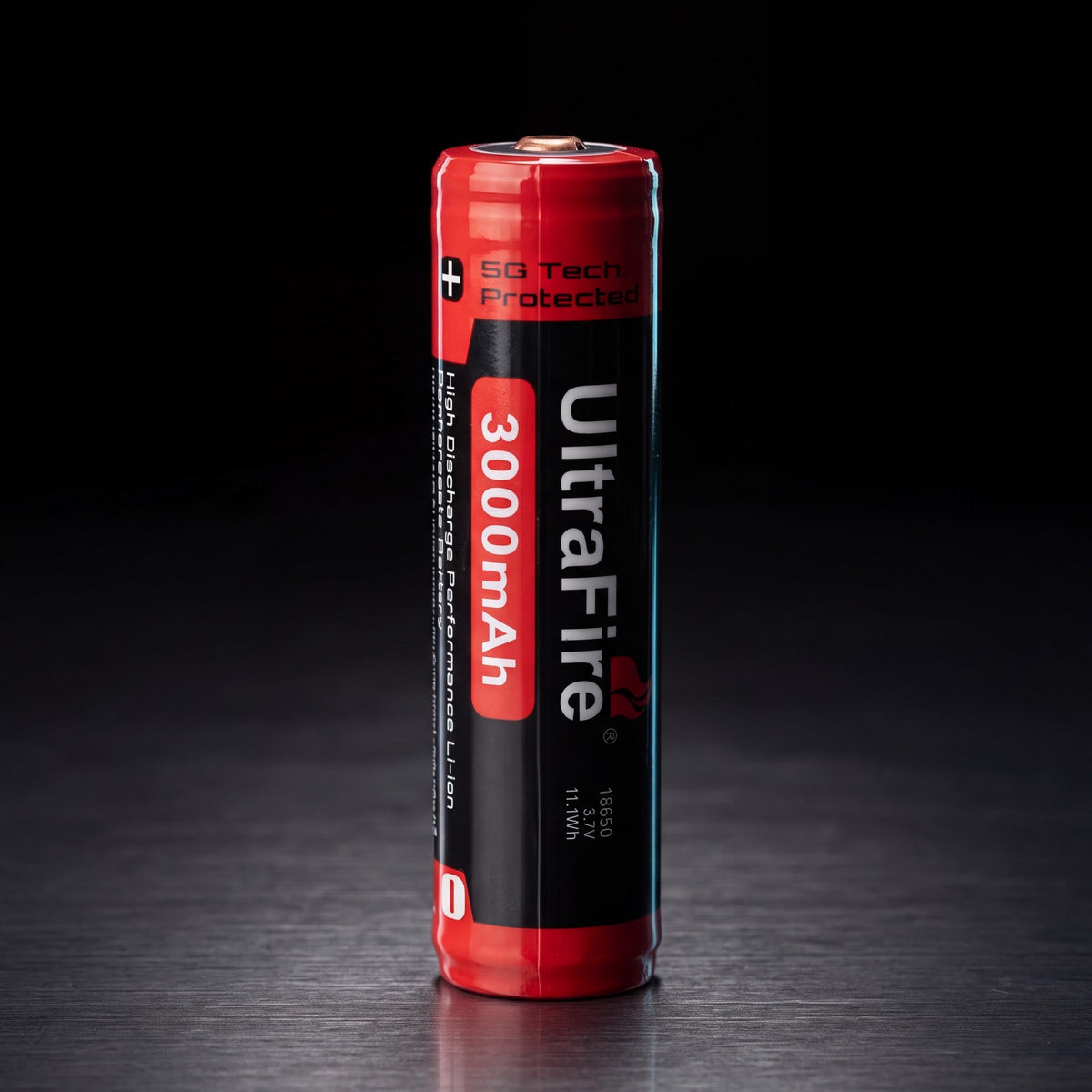
- Keep the battery charged. A low cell shortens turbo and dims output. If you expect to need turbo, start with a full charge — our guide to 18650 vs 21700 vs 18350 battery sizes covers what different cells can deliver.
- Expect shorter turbo in hot weather. In summer heat or direct sun, step-down comes earlier. In cold weather it comes later.
- Don’t keep overriding step-down. Most lights let you switch turbo back on manually, but repeated overrides on a hot light can shorten the life of the LED and the battery.
When Heat Means a Real Problem
Step-down itself is normal. These signs are not — stop using the light and check it:
- Dims within seconds from a cold start. Thermal step-down needs a minute or two to build heat. Instant dimming points to the battery or the contacts.
- Flickers or cuts out. Usually a loose tailcap, dirty contacts, or a failing cell — not the thermal circuit.
- Won’t return to higher modes after cooling down. A healthy light recovers once it cools. If it stays dim, the cell is likely drained or the contacts need cleaning.
- One part gets far hotter than the head. A hot tailcap or battery tube while the head stays cool suggests a battery or connection problem, not LED heat.
- Smell, swelling, or a battery that gets hot on its own. Stop using the light, remove the cell only if it is safe to do so, and contact support. Do not open the light or modify the driver yourself.
For the first three cases, the user-level checks are simple: make sure the tailcap is tight, clean the contact surfaces, and try a known-good, fully charged cell. If the problem persists, contact the maker’s support.
Frequently Asked Questions
Is it normal for a flashlight to get hot on high or turbo?
Yes. A warm body means heat is moving away from the LED, which is exactly what the design intends. On a compact high-output light, expect noticeable warmth at the head within 30–90 seconds on turbo. It should feel warm or hot to hold, then settle once the light steps down — not keep climbing.
How hot is too hot?
If the body is too hot to hold comfortably, it is time to drop to a lower mode and let it cool — that point is roughly 60 °C (140 °F) at the surface. The LED junction itself tolerates around 150 °C, but your hand does not, and lithium-ion cells should stay below about 60 °C. The practical rule is simple: if you can’t hold it comfortably, turn it down.
Can I turn turbo back on right after step-down?
Yes, most lights let you switch back to turbo manually. But if the body is still hot, the sensor will trip again much faster — sometimes within seconds. Repeated overrides on a hot light can shorten the life of the LED and the battery, so it is better to let the light cool for a minute first.
Why doesn’t turbo come back to full brightness right away?
Because the body is still above the temperature threshold. The driver holds output down until the light cools below that threshold, then allows turbo again. This is not a fault — it is the thermal circuit doing its job. A minute in your hand or in moving air is usually enough.
Does cold weather make turbo last longer?
Yes. Cold air and wind give the light more thermal headroom, so the temperature sensor takes longer to trip and turbo holds longer. Heat and still air do the opposite. That is also why the same light can seem to behave differently between a winter night and a summer evening.
Lights That Put This Into Practice
The SZ3 is the example used in this article: a 1,300-lumen maximum output in a 115-gram body, which is exactly the kind of light where turbo is a burst and High is the working mode. Its swivel head and magnetic tail make it a work light first, and USB-C charging keeps the cell topped up so turbo stays available when you need it.

UltraFire SZ3 Swivel Head EDC Flashlight | 1300LM CRI90+
A 1,300-lumen maximum output in a pocket-size flat body — turbo for brief checks, High for the work itself. Aim the swivel head at your task, stick the magnetic tail to anything metal, or bounce the flood beam off the ceiling.
- 1,300 lumens max, high-CRI 90+ for true colors
- 0–100° swivel head with spot + flood dual beams
- Magnetic tail for hands-free mounting
- 1,500 mAh battery, USB-C charging (works while charging on low)
- IPX6 waterproof, 1-meter drop resistance, 3-year warranty
- $55.99
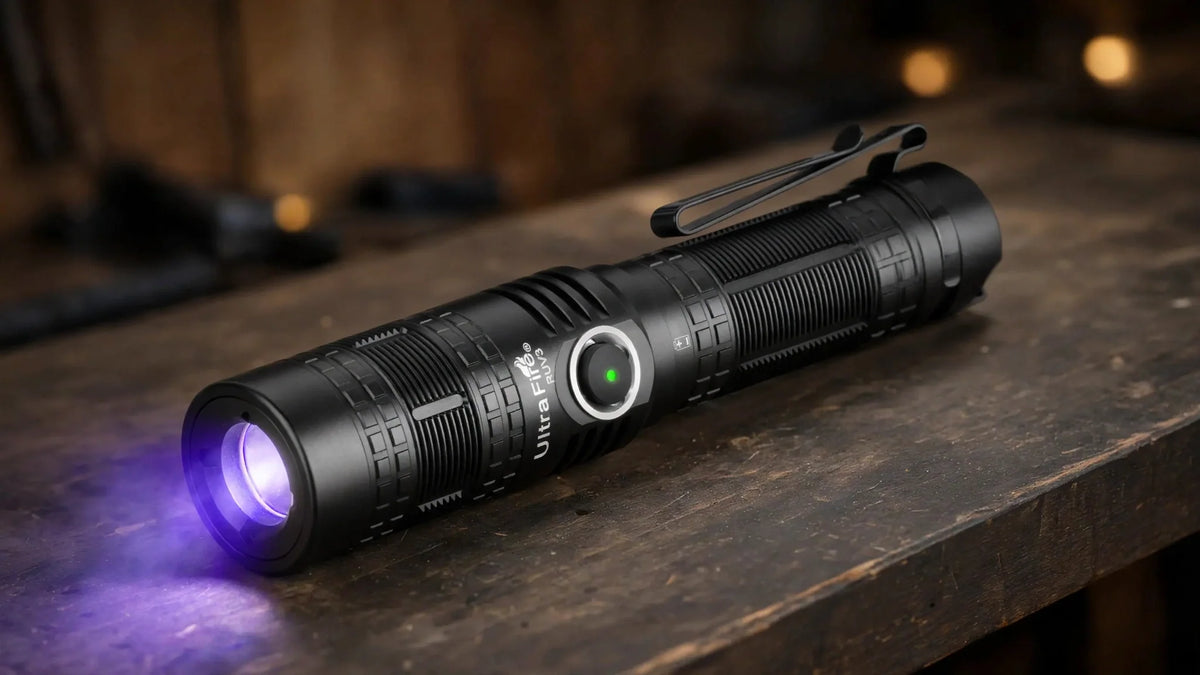
UV lights make heat the same way. The RUV3 runs a 10-watt 365nm LED through a compact head, so it warms up during long inspection sessions too — the same rules apply: work in passes, let it cool between long runs, and keep the cell charged.

UltraFire RUV3 365nm UV Flashlight | 10W ZWB2 Filter
A true 365nm UV light with a ZWB2 filter for a clean beam — for mineral hunting, resin curing, and leak detection. The same thermal rules apply: a 10-watt LED in a small head makes real heat on long runs.
- 365nm UV, 10W output
- ZWB2 filter for a pure 365nm beam
- $49.99
Final Thoughts
Turbo is a burst, not a cruising speed — think of it as the redline on a tachometer, with step-down as the rev limiter. A light that dims after a minute or two on turbo is not failing; it is protecting its LED, its battery, and your hand from heat it cannot shed. Judge a light by the High mode you will actually live in, use turbo in short bursts, and give the body a minute to cool before asking for peak output again. The physics does not negotiate — but once you understand it, you stop fighting it.