

If you are worried about bringing uninvited guests home from your travels or suspect an infestation in your bedroom, a UV flashlight is one of the best early warning tools you can own. However, not all blacklights are created equal. When it comes to hunting down bed bugs, picking the right wavelength is the difference between spotting a hidden trace and missing it entirely.
Here is everything you need to know about using UV light for bed bug detection.
The Big Myth: Do Live Bed Bugs Glow? There is a common misconception that live bed bugs light up brilliantly under a blacklight. In reality, their physical bodies do not reliably fluoresce. You aren't actually looking for the bugs themselves with the UV light; you are hunting for the biological traces they leave behind. A UV flashlight is used to detect hidden organic matter, such as fecal stains, urine spots, and shed exoskeletons (molted skins), which will emit a pale white, yellow, or blue-green glow.
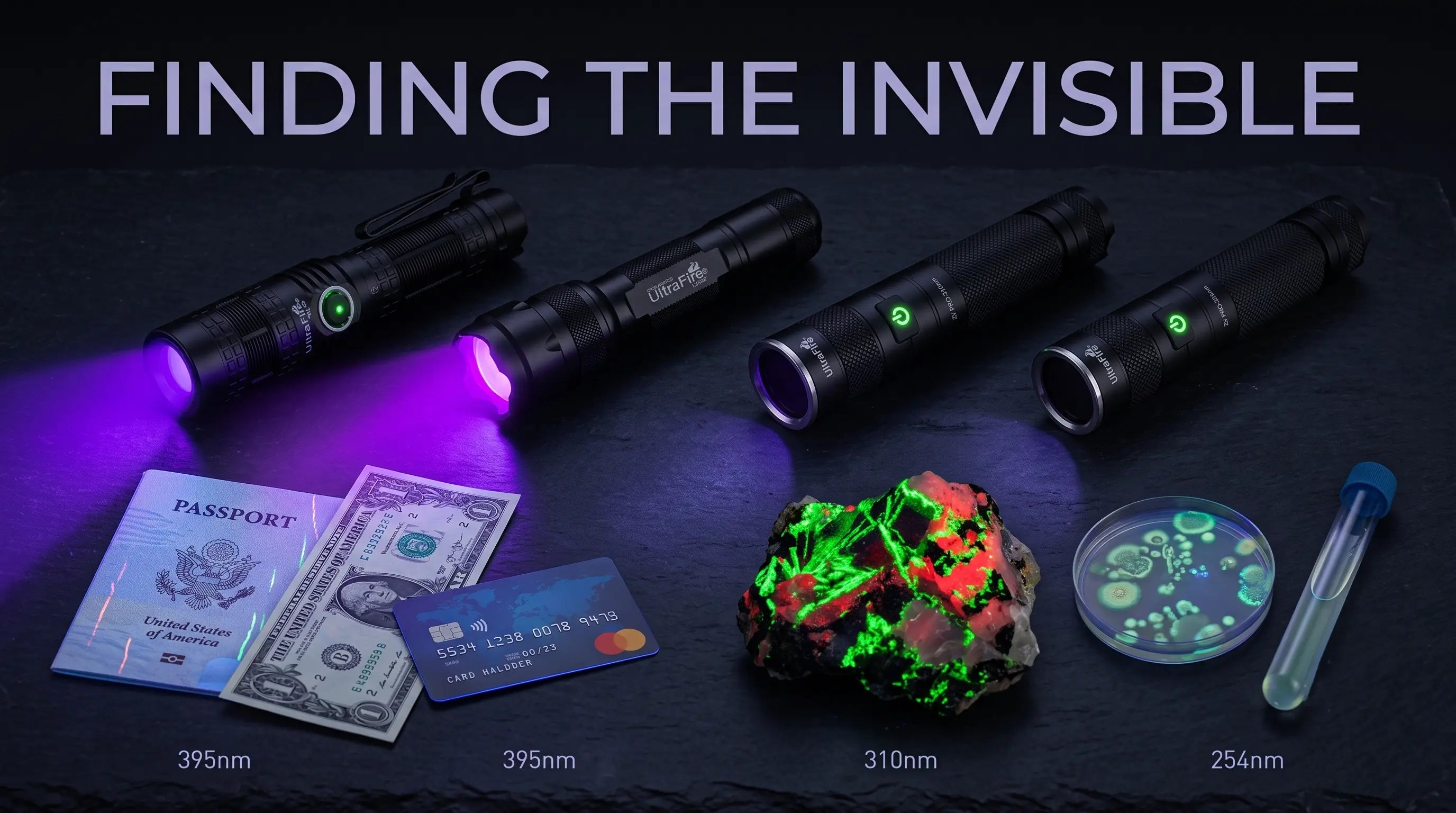
Choosing the Right Wavelength: 365nm vs. 395nm When shopping for a UV flashlight, you will primarily encounter two wavelengths. Here is how they compare:
-
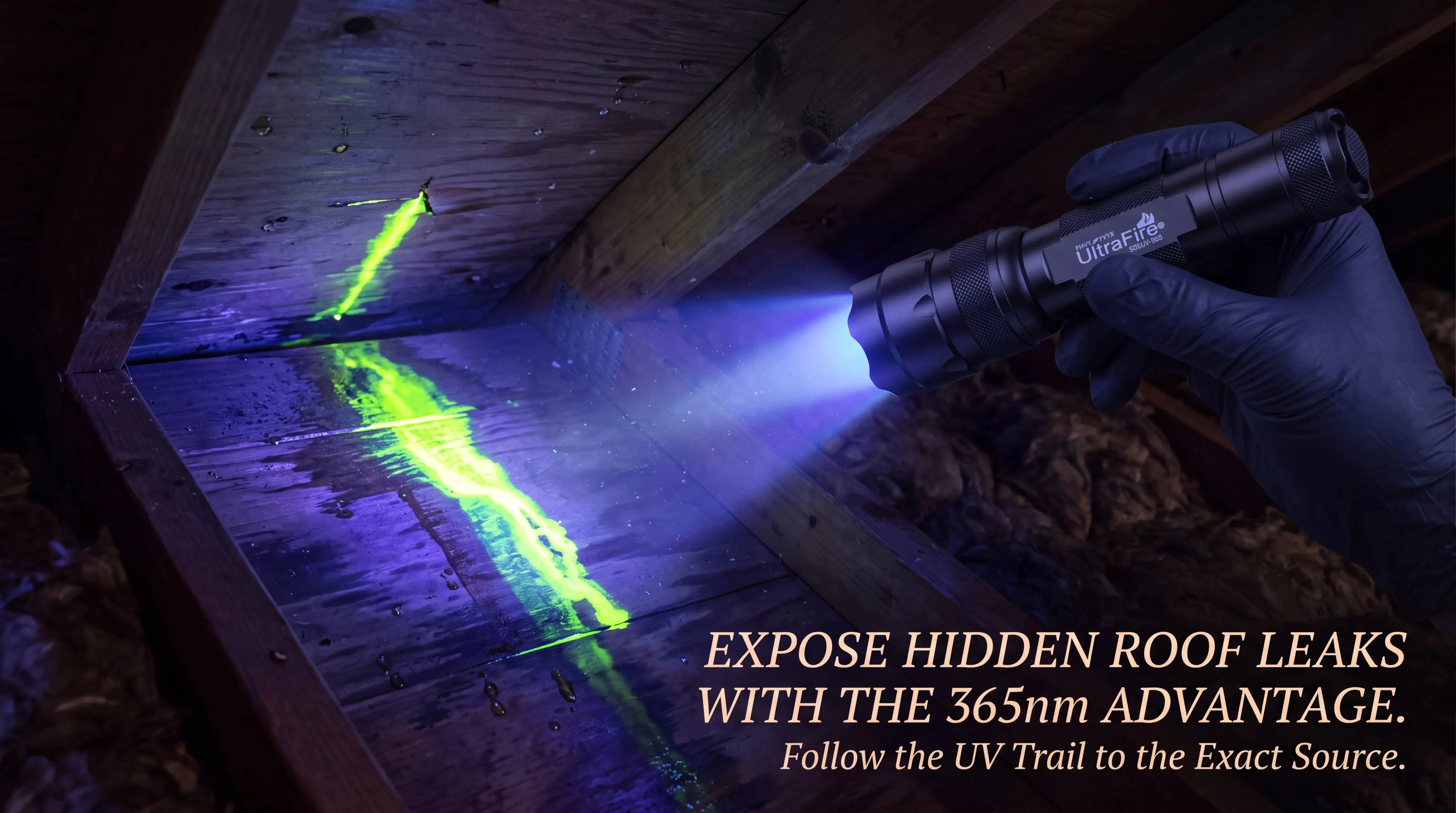
365nm (The Gold Standard): This wavelength is highly recommended for pest and stain detection. A 365nm UV flashlight emits very little visible "purple" light. This lack of ambient glare provides maximum contrast in a dark room, making biological stains stand out clearly. If you are looking for professional-grade accuracy, equipping yourself with a 365nm UltraFire UV flashlight will deliver the most precise detection results.
-
395nm (The Budget Alternative): A 395nm flashlight can cause bed bug traces to fluoresce, but it produces a much stronger, visible purple glare. This heavy ambient light tends to wash out the faint glow of the organic stains, making it significantly harder for the naked eye to spot them.
Pro Tips for a Successful Inspection Having the right UltraFire flashlight is only half the battle. Proper technique is crucial for a successful sweep:
-
Create Total Darkness: UV light requires a pitch-black environment to be effective. Turn off all the lights and pull the blinds shut. In a brightly lit room, the UV contrast is practically useless.
-
Scan Close and Slow: Hold your UltraFire flashlight about 2 to 4 inches away from the surface. Slowly trace along high-risk areas, paying close attention to mattress seams, baseboards, headboards, and furniture joints.
-
Follow Up Visually: A UV flashlight is an excellent early warning tool, but it shouldn't be your only one. If you spot glowing traces, always follow up with a magnifying glass and a bright, standard white light to visually confirm the presence of actual bugs or eggs.