

Have you ever bought a UV flashlight, pointed it at a stain or a mineral, and saw... absolutely nothing? The problem probably wasn’t the flashlight; it was the wavelength.
Ultraviolet (UV) light isn't a one-size-fits-all tool. Different materials react to different wavelengths, which are measured in nanometers (nm). Think of the wavelength as a key, and the fluorescent material as the lock. If you don't have the right key, it simply won't work.
Whether you're a rockhound, a cleaner, or a professional investigator, here is your definitive guide to picking the right UV wavelength for your needs.
395nm: The Everyday Detector
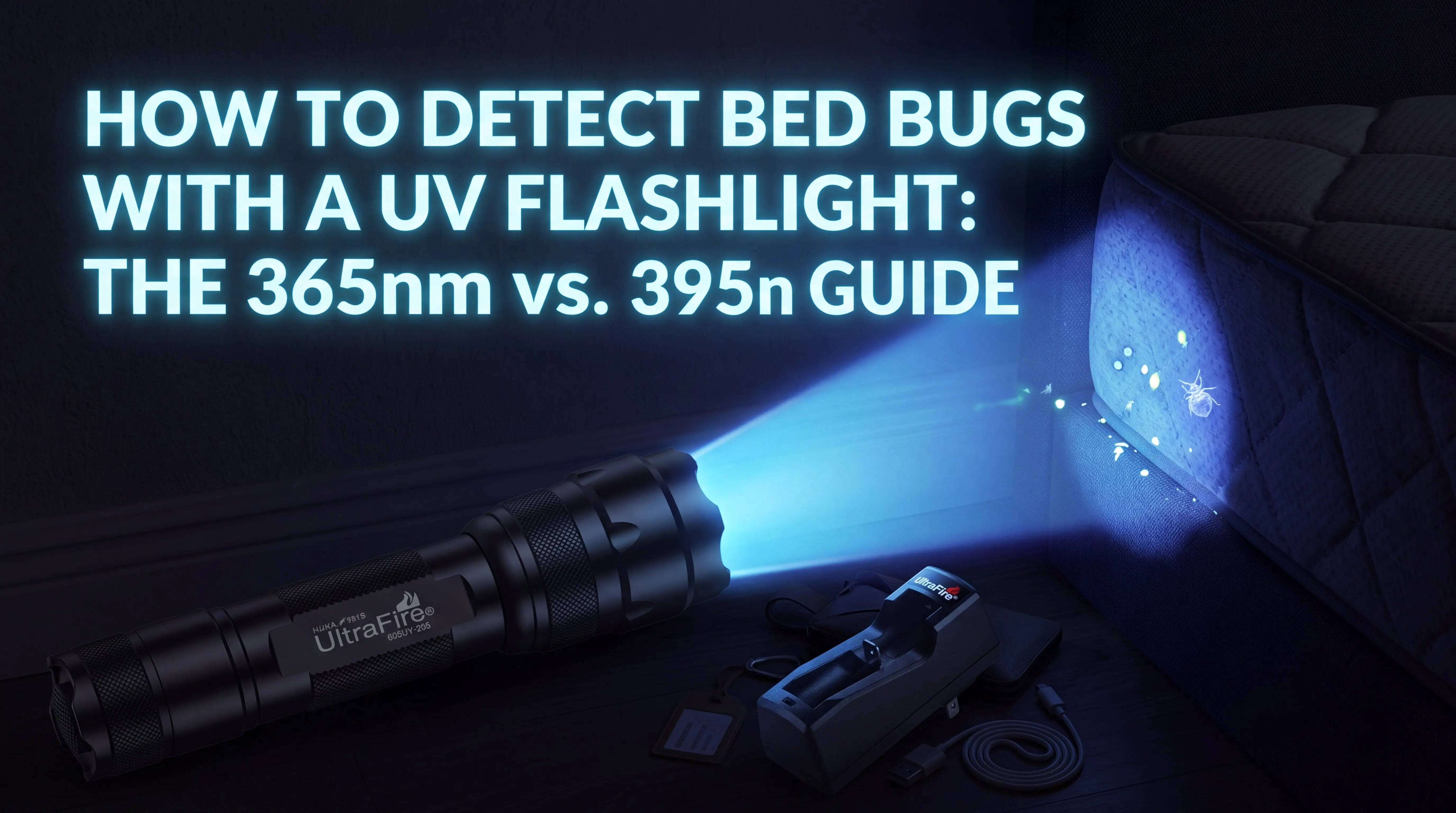
If you're looking for an affordable, general-purpose blacklight for around the house, 395nm is your go-to. It emits a noticeable purple visible light alongside the UV output.
-
Best for: Finding dried pet urine on carpets, hunting scorpions, spotting bed bugs, and checking hotel room cleanliness.
-
Top Pick: UltraFire® 502UV Flashlight — A versatile, zoomable option perfect for sweeping large areas like living rooms or backyards.

365nm: The Professional’s Choice
This is the gold standard for most UV applications. The 365nm wavelength causes a much stronger, more vivid fluorescent reaction in most materials compared to 395nm.
-
Best for: Curing UV resin, verifying ID cards and counterfeit currency, detecting AC fluid leaks, and inspecting uranium glass.
-
The ZWB2 Filter Difference: A standard 365nm flashlight still emits a faint white/bluish light that can wash out weak fluorescence. A ZWB2 filter is a special black glass lens that blocks out visible light while letting pure UV pass through. The result? Zero background glare and a brilliantly glowing subject with maximum contrast.
-
Top Pick: UltraFire® RUV3 365nm UV Flashlight — Equipped with a high-quality ZWB2 filter for professional-grade clarity and contrast.

310nm: Mid-Wave UV (UVB)
Moving into the UVB spectrum, 310nm is a highly specialized wavelength that bridges the gap between long-wave and short-wave UV.
-
Best for: Scientific research, dermatology applications, and identifying specific mid-wave fluorescent minerals (like certain types of calcite or willemite) that don't react to standard 365nm lights.
-
Top Pick: UltraFire® ZV PRO-310nm UV Flashlight — Built for enthusiasts and professionals who need precise mid-wave output for specialized detection.

254nm: Short-Wave UV (UVC) Powerhouse
254nm is short-wave UV. It is highly energetic and interacts with materials that completely ignore standard UVA lights. Caution: UVC is harmful to bare skin and eyes; safety glasses are absolutely required during use!
-
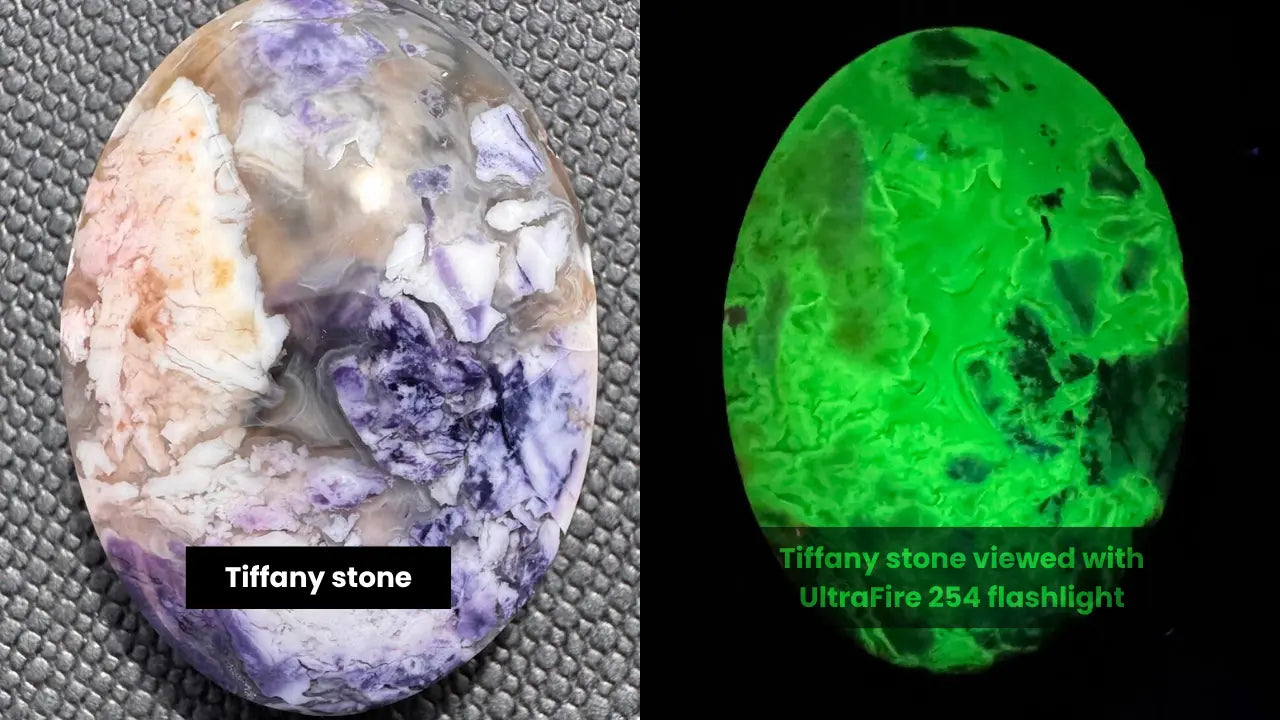
Best for: Sterilization (it effectively destroys bacterial and viral DNA), laboratory chromatography, and hardcore gemology (identifying short-wave minerals like rubies, diamonds, and specific fluorites).
-
Top Pick: UltraFire® ZV PRO-254nm UV Flashlight — A specialized, high-power tool designed for geology experts, scientific research, and sanitation needs.