



Q: Is the 254nm light safe to use without safety glasses?
Uncover the Unseen. The Professional’s Choice for Shortwave UV.
Built for the Hunt & The Lab.

Title
See What Standard UV Misses.


STANDARD 365NM UV
ZV-254NM
Title
Why the ZV-254nm Outperforms the Rest.
Title
Simple, Single-Mode Operation.
Title
Engineered for Accuracy & Durability.

Title
What the Pros Are Saying.

Title
Frequently Asked Questions (FAQ)
Title
Customer Reviews
Based on 2 reviews
100%
(2)
0%
(0)
0%
(0)
0%
(0)
0%
(0)
R
It's so hard to find a genuine 254nm shortwave UV light online these days, so I am incredibly grateful I stumbled across this one. The price is extremely reasonable for what you get, and it's definitely the real deal! Another huge bonus is that they actually include a pair of polycarbonate safety glasses, which is an absolute must-have for eye protection with this kind of wavelength. Great value and works perfectly. Highly recommend!
U
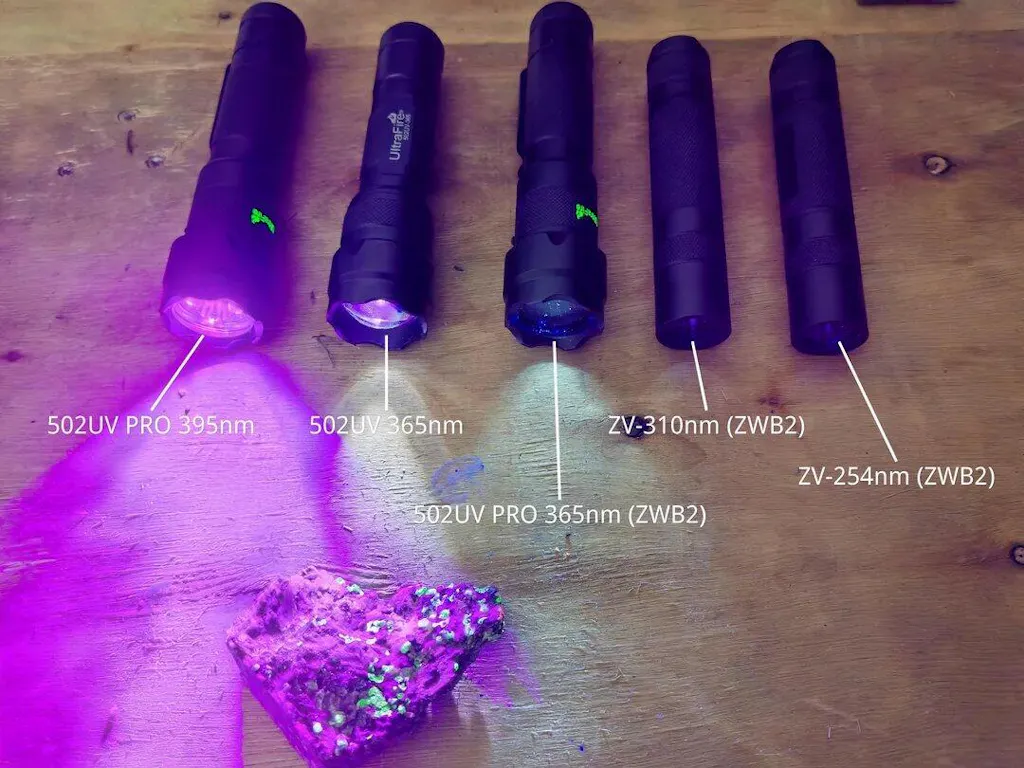
I was playing around with a small willemite + calcite piece and decided to do a quick wavelength comparison, mostly because I keep seeing 365nm and 395nm UV lights get treated like they’re interchangeable.
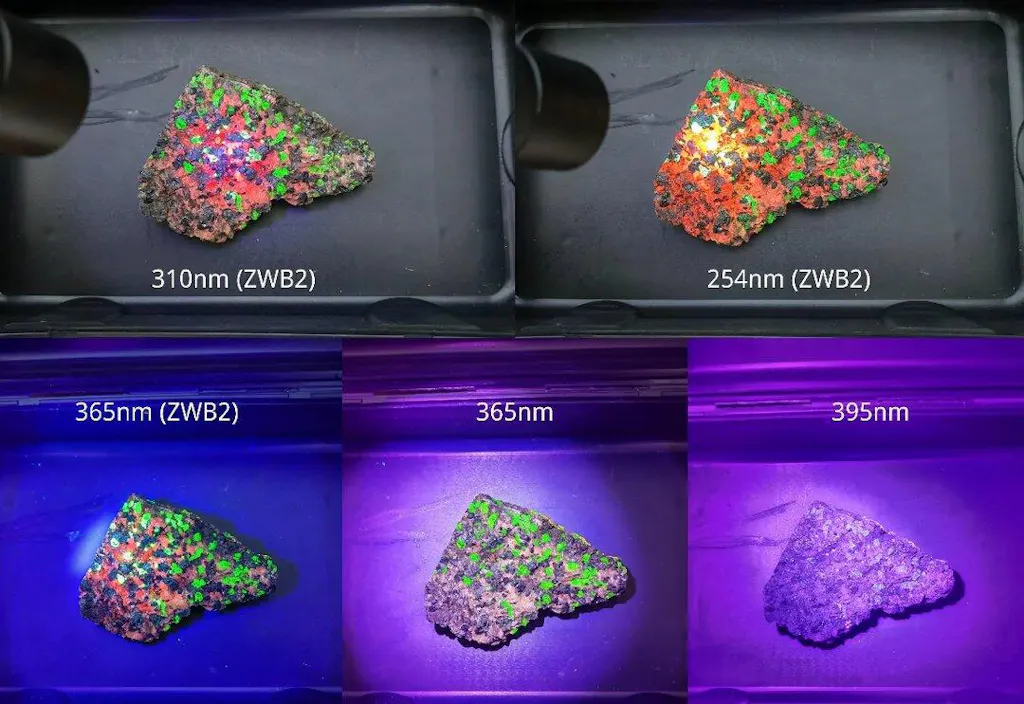
They really aren’t, at least not for this kind of mineral. I had a few UV lights on hand — 254nm shortwave, 310nm midwave, 365nm with/without ZWB2, and a 395nm light,,so I tried them side by side on the same specimen.
A few takeaways:
254nm was the clear winner for this rock. The willemite went bright green and the calcite showed that strong orange/red response, so the contrast was immediately obvious.
310nm did something, but not nearly as dramatic. Still useful, but it didn’t have that “oh wow” separation between the green and red/orange.
365nm can work, but the filter matters a lot. With a proper ZWB2 filter, the fluorescence is much cleaner because you’re not fighting all that visible purple spill.
Unfiltered 365nm made the red/orange harder to appreciate, at least to my eyes/camera, because the visible leakage kind of washes over everything.
395nm was basically useless for this particular sample. It made things look purple-ish, but it didn’t really bring out the willemite/calcite response in any meaningful way.
So I guess the boring-but-true conclusion is: for fluorescent minerals, wavelength matters more than “UV brightness.” A strong 395nm light can still be the wrong tool, while a filtered 365nm is much better for general stuff, and 254nm is in a different category for minerals like this.
ALSO: shortwave UV safety is not something to be casual about. Eye/skin protection, don’t shine it around people/pets, etc.
Shop with Absolute Confidence.
Upgrade Your Gear Today.