

What Makes 254nm Different?
Ultraviolet light is broken down into three main bands based on wavelength: UVA, UVB, and UVC.
-
365nm & 395nm fall into the UVA (Longwave) category. They are relatively safe for casual use and emit a faint purple/blue visible glow.
-
254nm is firmly in the UVC (Shortwave) category. This is a high-energy wavelength that is completely invisible to the human eye. To make these flashlights work effectively, they require a specialized optical filter (like Hoya U-330 or ZWB3 glass) to block out excess visible light generated by the LED or bulb, allowing only the pure UVC energy to shine through.
Top Applications for a 254nm UV Flashlight
Because of its high energy and short wavelength, a 254nm light interacts with materials in ways standard UV lights simply cannot.
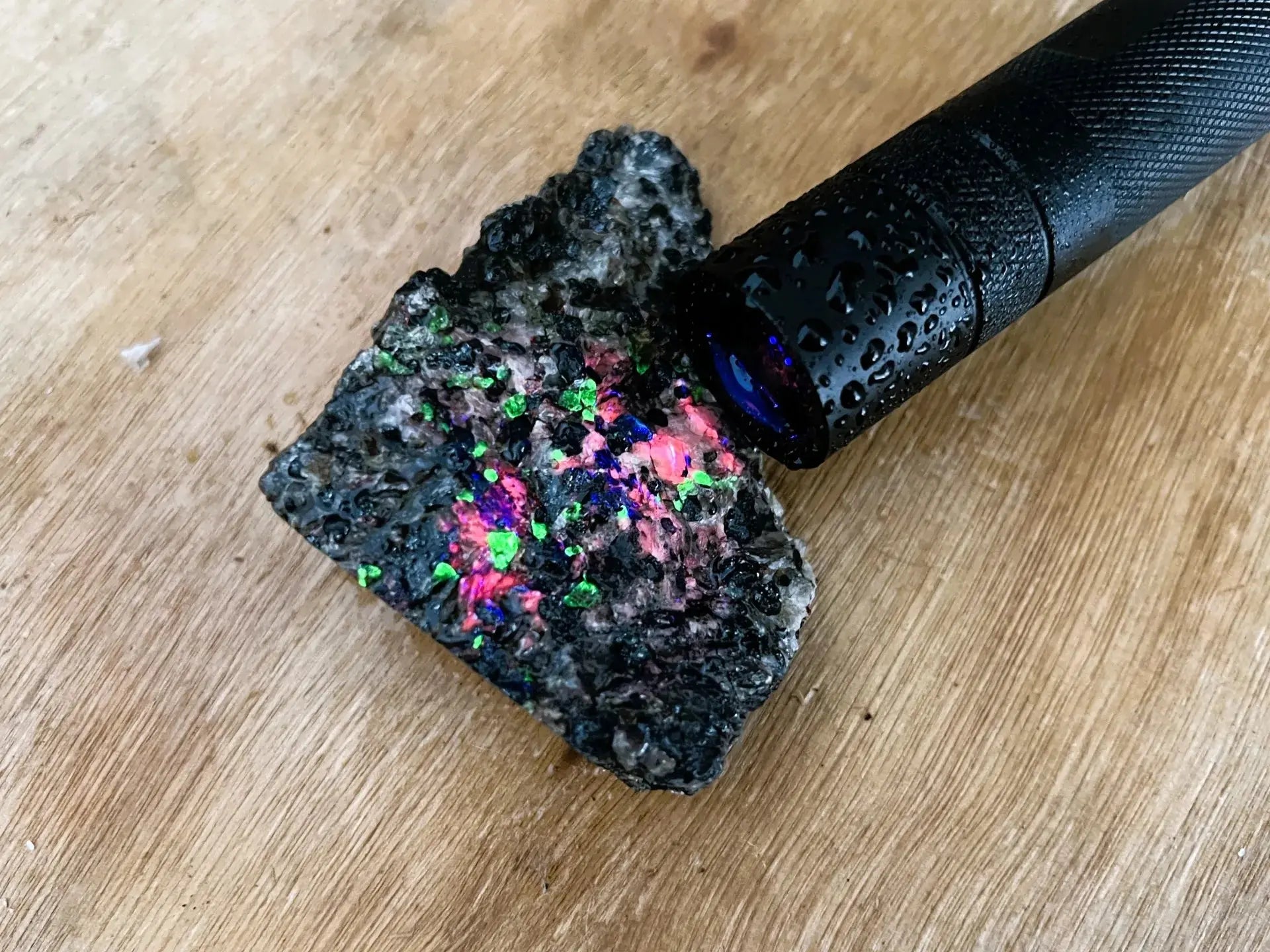
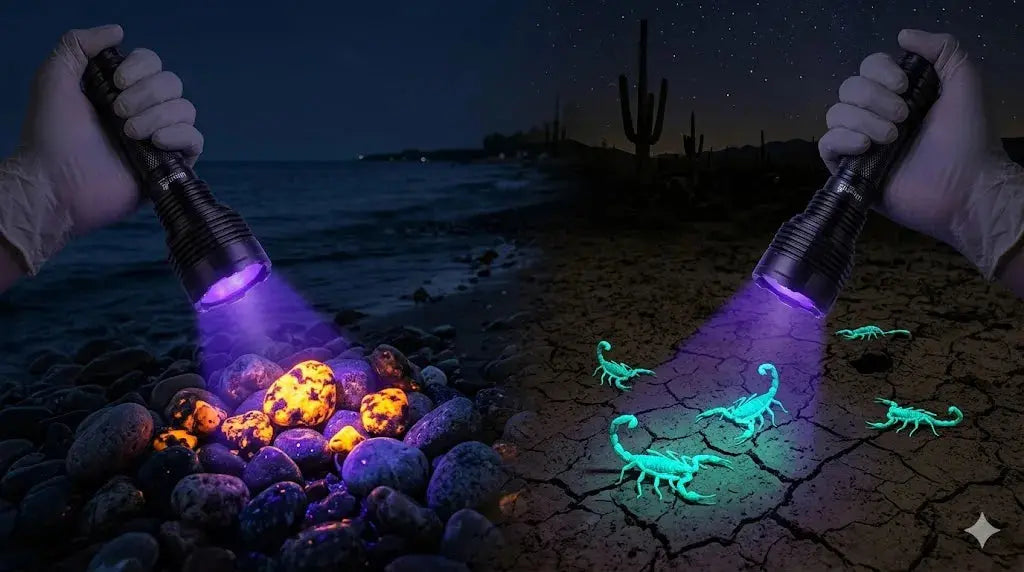
1. Fluorescent Mineralogy (Rockhounding) This is the number one reason hobbyists seek out 254nm flashlights. While only about 10% of fluorescent minerals react to standard UVA light, nearly 90% of them will glow with vibrant, neon colors under 254nm shortwave UV. If you are out in the field hunting for Willemite, Calcite, Fluorite, or rare gems, a shortwave light is an absolute must-have in your gear loadout.
2. Germicidal Sterilization UVC light at 254nm is germicidal. It carries enough energy to penetrate the cell walls of bacteria, viruses, and fungi, disrupting their DNA and RNA. Professionals use these lights to quickly sterilize laboratory tools, sanitize hard-to-reach surfaces, and detect biological contaminants in HVAC systems or commercial spaces.
3. Professional & Industrial Inspection In the industrial and engineering worlds, 254nm light is used for Non-Destructive Testing (NDT). Mechanics and technicians use shortwave-reactive fluorescent penetrants to reveal microscopic cracks, leaks, or metal fatigue in automotive parts and aviation components before they lead to catastrophic failures.
4. Forensic Science & Authentication Forensic teams rely on shortwave UV to identify specific trace evidence at crime scenes. Additionally, high-level security features on certain passports, currencies, and historical documents are designed to only fluoresce under 254nm light, making it a critical tool for fraud detection.
⚠️ CRITICAL SAFETY WARNING Standard EDC lights are safe to handle, but 254nm UVC light requires strict safety protocols. It is highly hazardous to all living tissue. Direct or prolonged exposure will cause severe skin burns (similar to a fast, intense sunburn) and "welder's flash" (photokeratitis), which can permanently damage your eyes. Never shine a 254nm light on your skin, and always wear certified UVC-blocking polycarbonate safety goggles when operating the flashlight.
The Bottom Line
A 254nm UV flashlight is not your average pocket light—it is a purpose-built, professional-grade tool designed for serious rockhounds, forensic experts, and industrial technicians. When handled with the proper safety gear, it unlocks a hidden world of vibrant fluorescence and uncompromising utility.