

The Science: Moving from UVA to UVB
Ultraviolet light is divided into three main categories based on wavelength: UVA, UVB, and UVC.
-
UVA (315nm – 400nm): Lower energy, safe for brief exposures, and highly common.
-
UVB (280nm – 315nm): Medium energy. This is the wavelength responsible for sunburns, but also for triggering specific chemical and biological reactions.
A 310nm flashlight hits a very specific sweet spot in the UVB range. Because the wavelength is shorter, the photons carry more energy than a standard 365nm light. This high-energy output is exactly why it is used for specialized applications that a standard UVA light simply cannot handle.
What is it Used For?
Because a 310nm light is a professional-grade emitter, its applications are incredibly targeted:
-
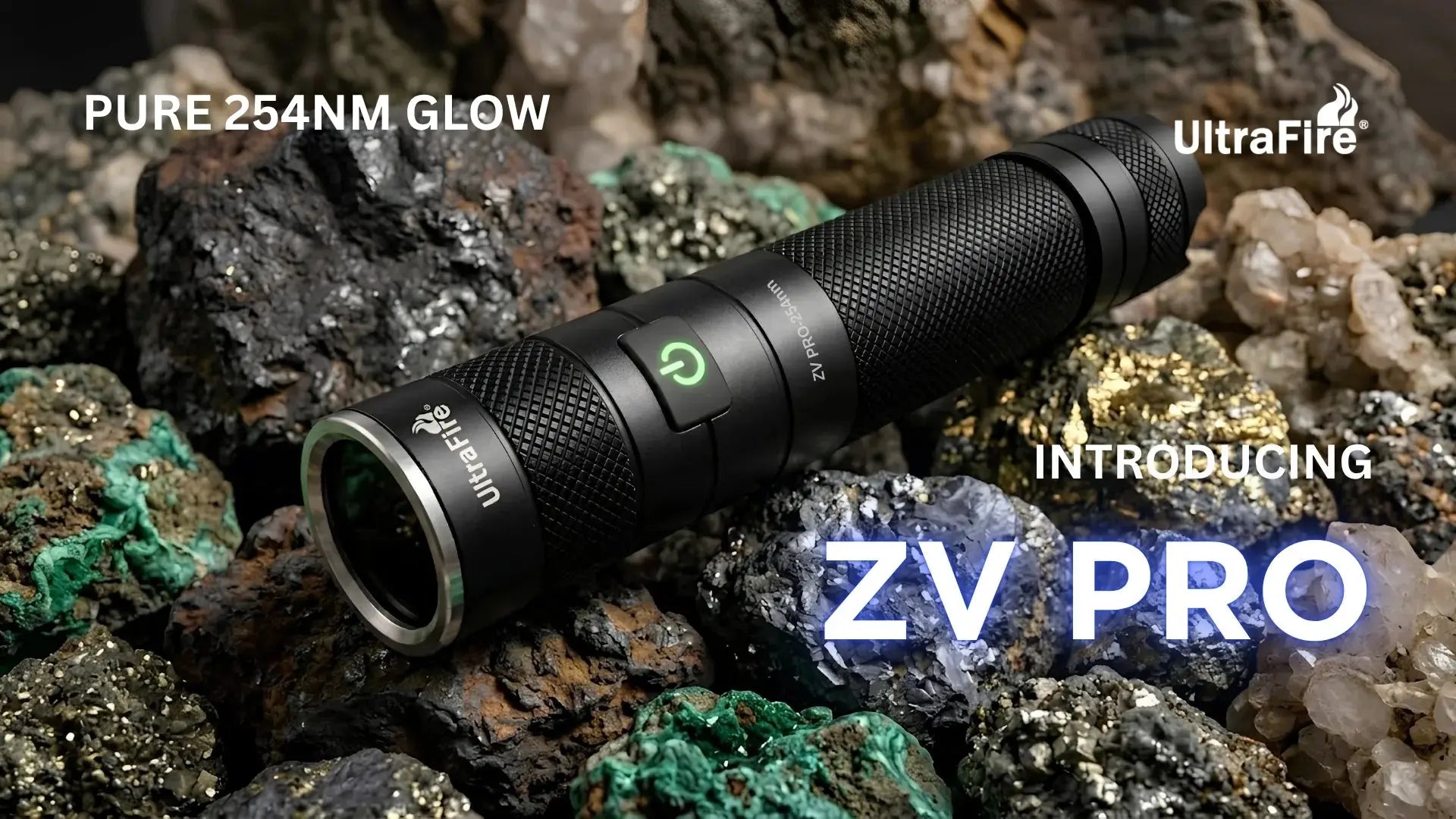
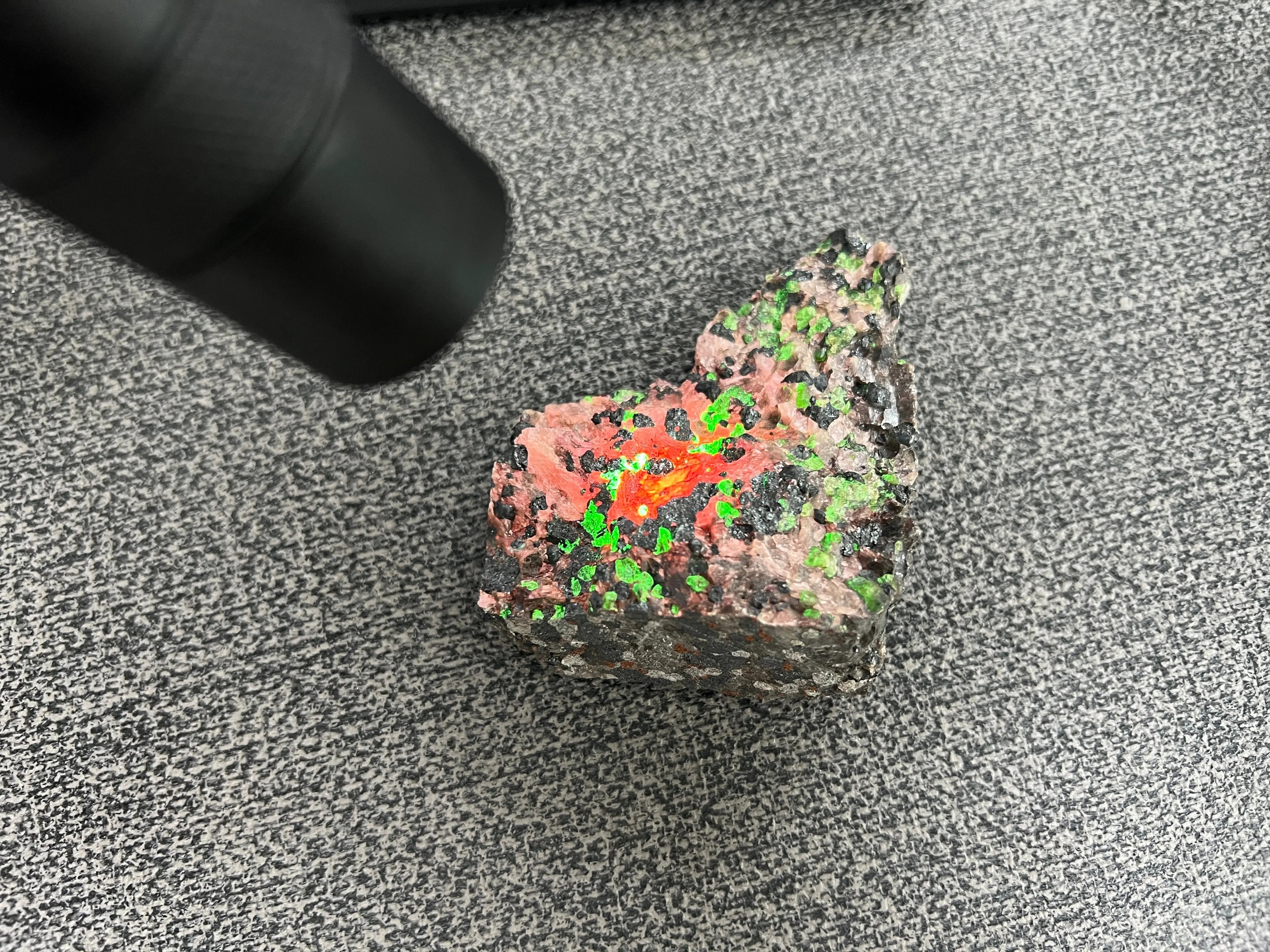
Advanced Mineralogy & Gemology: Many minerals and gemstones do not react to standard long-wave UVA light. However, under mid-wave 310nm UVB light, they will fluoresce with brilliant, identifying colors. Field geologists rely on these specific wavelengths for accurate mineral identification.
-
Scientific & Botanical Research: Botanists and agricultural scientists use UVB lights to study how plants react to environmental stress. The 310nm wavelength can induce specific stress responses in organic matter, allowing researchers to study plant resilience.
-
Specialized Industrial Inspections: Certain high-grade industrial adhesives and non-destructive testing (NDT) dyes are formulated to cure or fluoresce only under UVB light. For mechanics and industrial inspectors, a 310nm light is a necessary diagnostic tool.
-
Dermatological Applications: In medical settings, 310nm–311nm lights are often used in phototherapy to treat localized skin conditions like vitiligo or psoriasis. (Note: Medical applications require strictly calibrated clinical equipment, but handheld units exist for targeted spot use).
The Safety Mandate
With higher energy comes higher responsibility. You cannot treat a 310nm flashlight like a standard EDC pocket light. UVB radiation is damaging to human skin and eyes. If you are operating a flashlight in this spectrum, professional-grade UV-blocking eyewear is strictly mandatory. You must also ensure that the beam is never directed at bare skin for prolonged periods.
The Bottom Line
A 310nm UV flashlight is a purpose-built tool designed for experts who need precise, high-energy ultraviolet output. Whether you are out in the field analyzing minerals or running diagnostics with specialized fluorescent dyes, it provides a level of technical capability that standard UV lights simply cannot match.