
What is CRI?
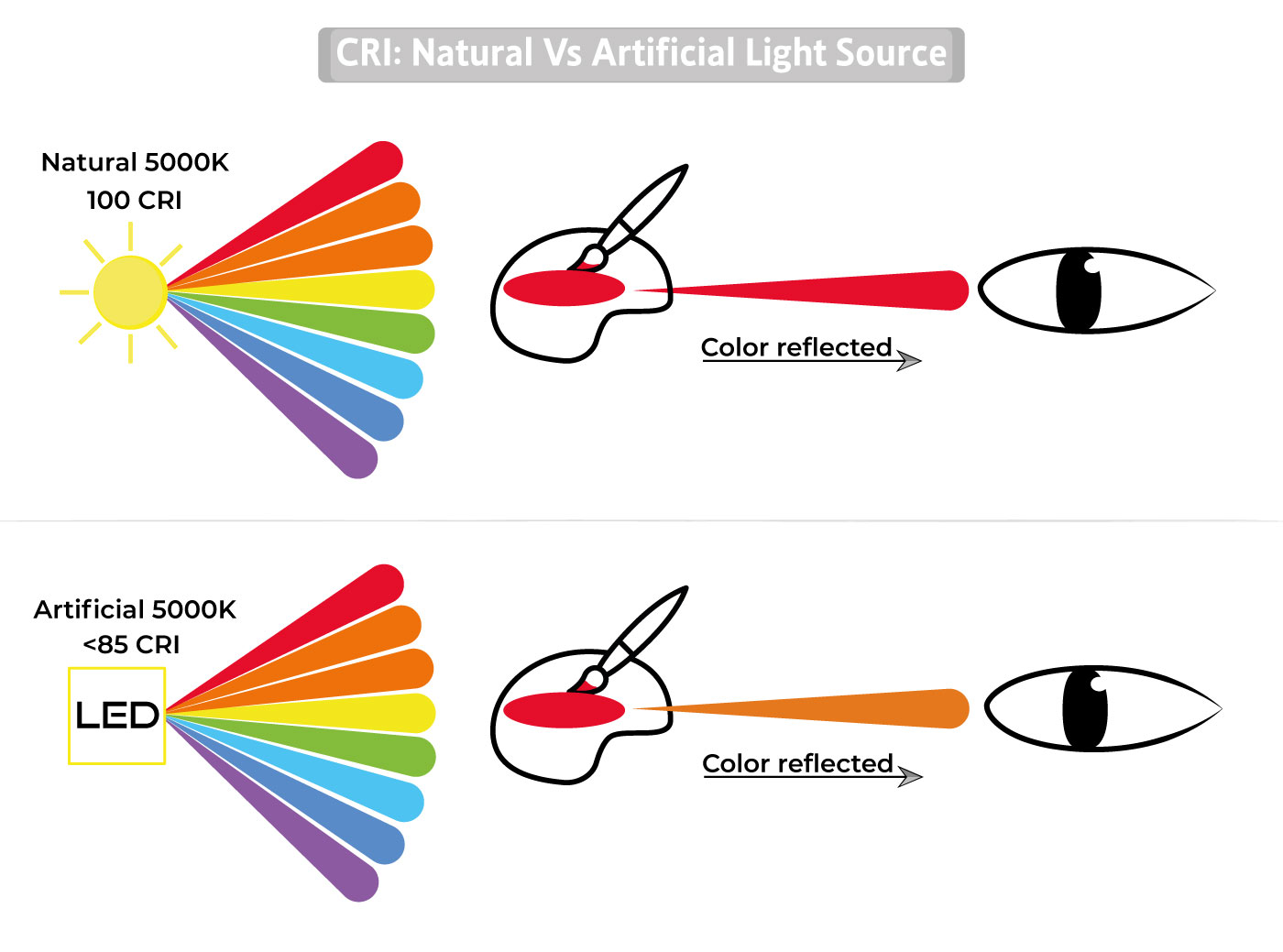
CRI, or Color Rendering Index, is a standard defined by the International Commission on Illumination (CIE) to quantify how well an artificial light source renders colors compared to a reference source, such as sunlight (which has a CRI of 100). In simple terms, a higher CRI means the light makes objects appear more vibrant and true-to-life.
In flashlights, CRI depends on the light spectrum produced by the LED or other emitter. LEDs generate white light by coating blue chips with phosphors, but gaps in the spectrum (e.g., missing red wavelengths) can cause color distortion. Objects might look washed out or unnatural under low-CRI light.
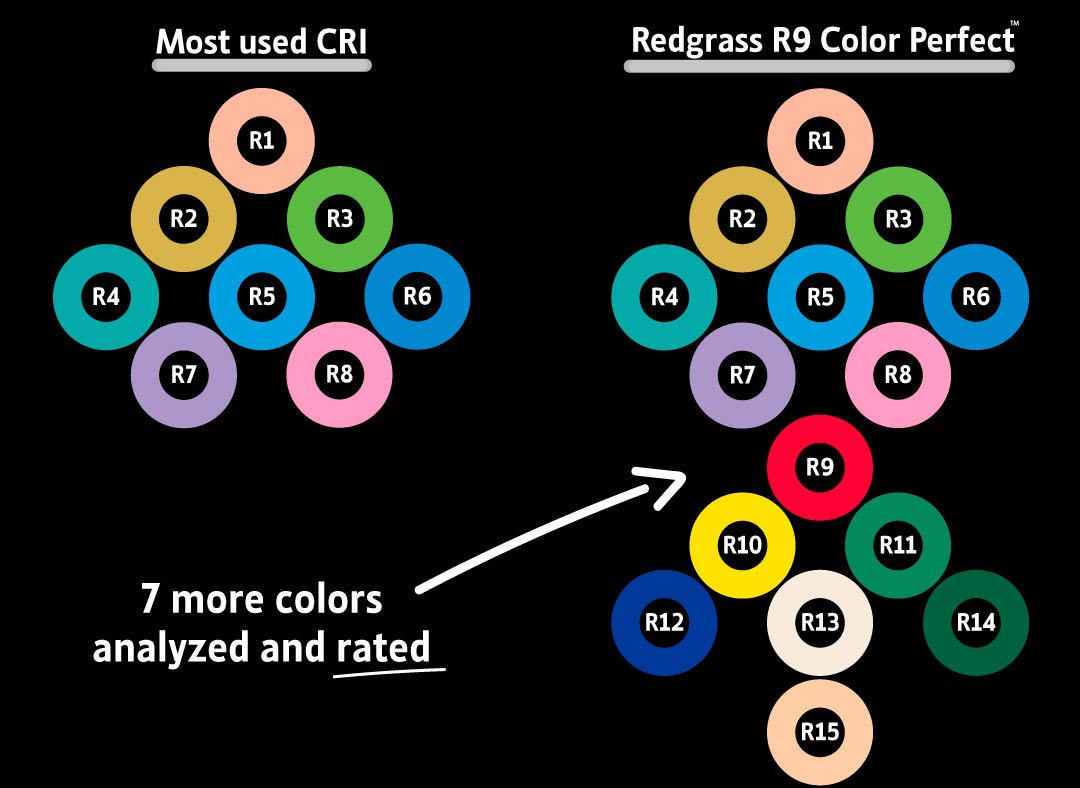
CRI is calculated using 14 test color samples (TCS), labeled R1 through R14. The general CRI (often called Ra) averages the first 8 pastel-like colors, while special indices like R9 (deep red) are important for certain applications. Here's an illustration of the standard CRI test color samples:
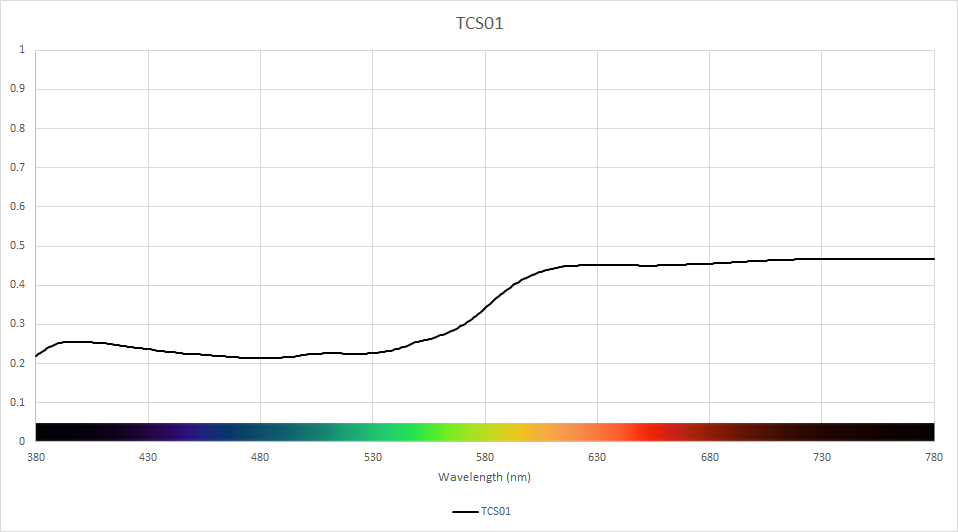 CRI/Ra test color samples (TCS) | Waveform Lighting
And a photo showing these samples under evaluation:
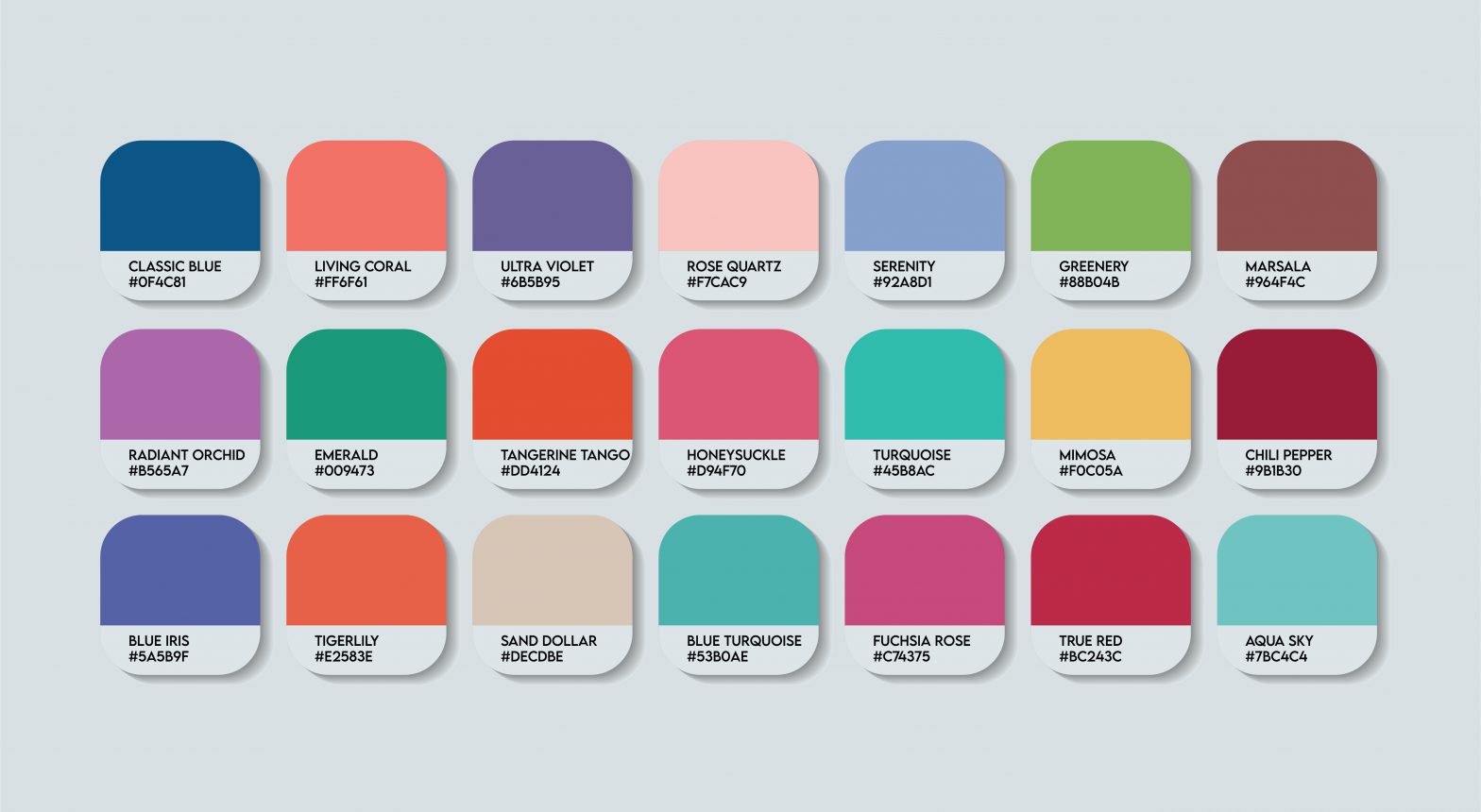 CRI/Ra test color samples (TCS) | Waveform Lighting
Why CRI Matters in Flashlights
Flashlights are used in scenarios like outdoor adventures, repairs, photography, or emergencies, where accurate color perception is crucial. High CRI helps distinguish details—like skin tones in first aid, wire colors in electrical work, or trail markers at night.
Low CRI can make reds appear dull or greens look grayish, potentially leading to misjudgments. Studies show prolonged exposure to low-CRI light increases eye strain as the brain compensates for color inaccuracies.
For a clear visual comparison, here's how natural light stacks up against artificial sources with varying CRI:
How CRI is Measured and Classified
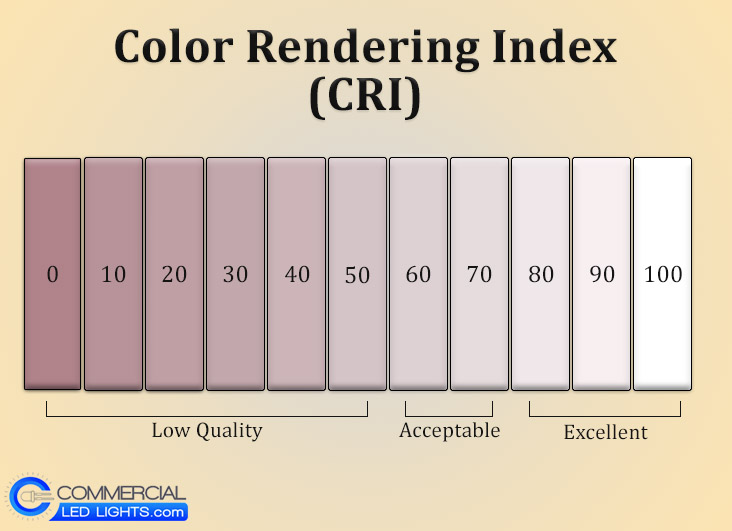
CRI is measured in a lab using a spectrophotometer, comparing color shifts under the test light versus a perfect reference. Scores range from 0 to 100:
- Below 70: Poor color rendering—common in basic utility lights; colors look distorted.
- 70–80: Acceptable for general use; basic color recognition but some loss in vibrancy.
- 80–90: Good—suitable for most detailed tasks; colors appear natural.
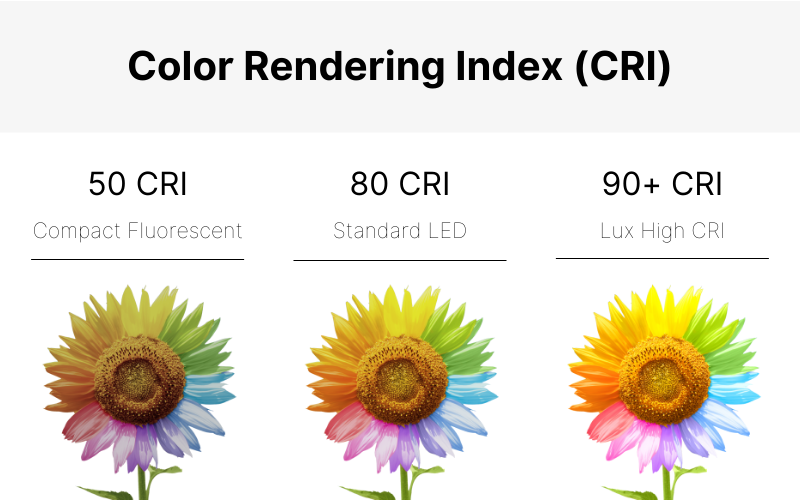
- Above 90: Excellent—ideal for critical color work; near-perfect reproduction.
A helpful explanatory graphic:
Another infographic summarizing CRI levels:
Note that CRI isn't perfect—it doesn't fully capture saturated colors (hence R9's importance). Newer metrics like TM-30 exist, but CRI remains the standard.
High-CRI LEDs often sacrifice some efficiency (lower lumens per watt) for broader spectrum coverage.
Real-World Differences: Low vs. High CRI
Low-CRI light often spikes in blue and lacks reds, making scenes look flat. High CRI provides balanced coverage for vivid, accurate colors.
Here's a side-by-side comparison on a color chart:
Another example focusing on red rendering (R9 value):
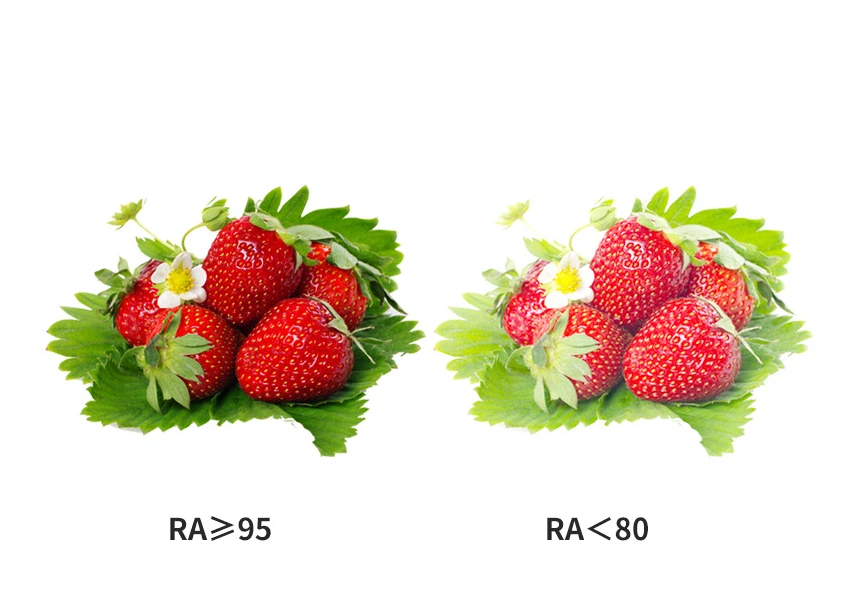
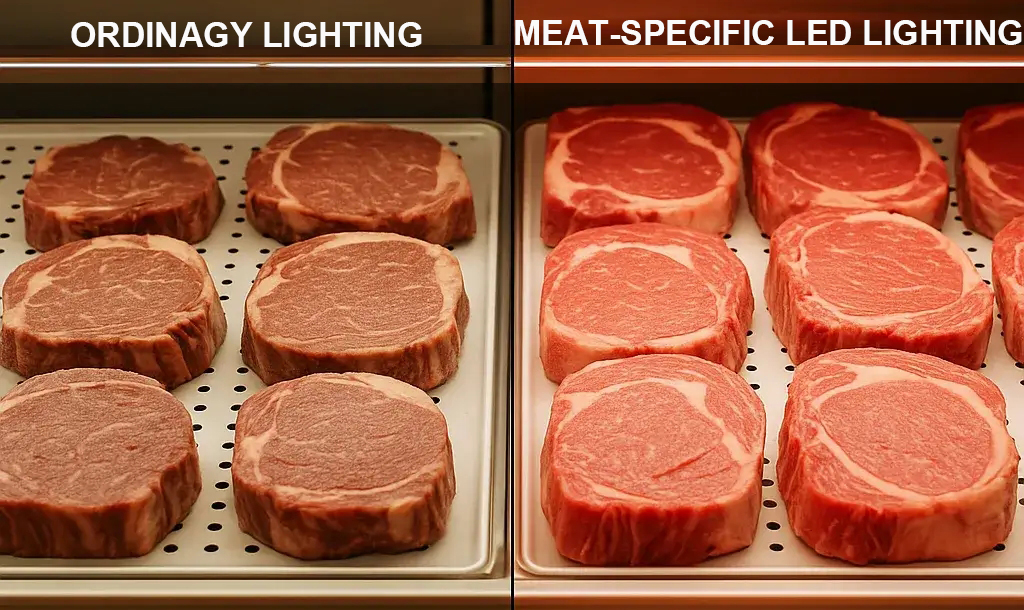
For everyday objects like food, the difference is striking—high CRI makes fruits and meats look fresh and appealing:
How to Choose CRI for Your Flashlight
Select based on your needs:
- Everyday/Emergency Use: CRI 70–80 is fine. Prioritize brightness and runtime.
- Outdoor Activities: Aim for 80+ to better see terrain, plants, or wildlife colors.
- Professional Tasks (e.g., mechanics, inspection): 90+ for accurate identification of materials or fluids.
- Photography or Art: 95+ to ensure true color capture.
- Medical/First Aid: Highest possible (90–100) for reliable skin tone assessment.
Pair CRI with color temperature (e.g., warm 3000K for indoors, neutral 5000K for outdoors). Test with a color chart if possible.
High CRI isn't always best—low CRI might penetrate fog better due to higher output.
Conclusion
Understanding CRI empowers you to pick a flashlight that delivers natural, reliable light. Whether for safety, comfort, or precision, higher CRI often enhances the experience. Consider your primary uses and balance with other factors like output and battery life for the best choice. This guide aims to provide clear, factual insights to help you decide wisely.